What Age Should Babies Start Swim Lessons?
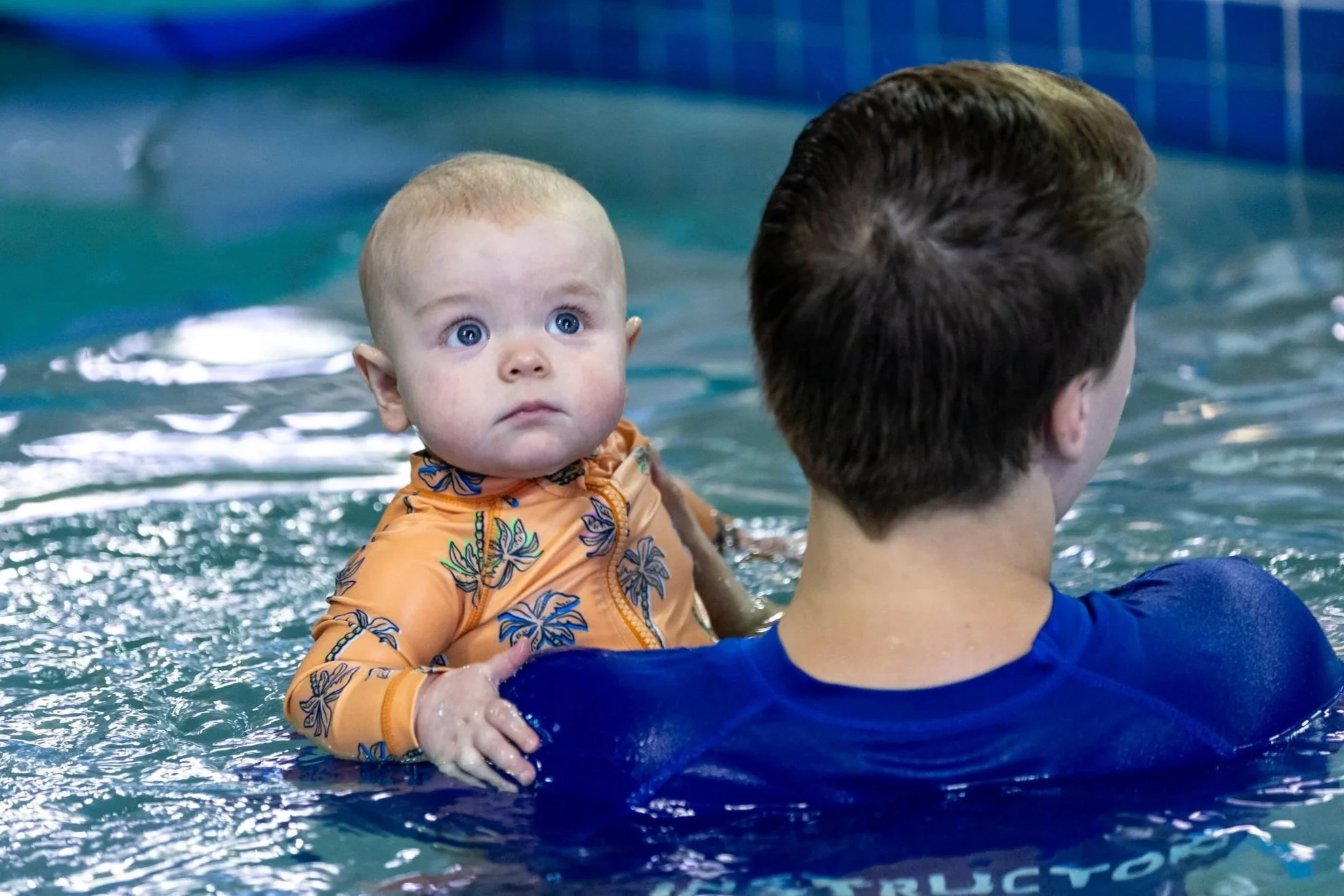
One of the most common questions parents ask is:
“What age should a child start Infant Survival Swim?”
The answer may surprise many families.
Water safety education can begin much earlier than most people realize.
In fact, many experts agree that early, positive water exposure can help children develop comfort, confidence, and foundational safety skills that support long-term success in and around the water.
At Infant Survival Swim (ISS), we believe water safety should begin early, be developmentally appropriate, and focus on helping families build safer relationships with water from the very beginning.
What Age Should Children Start Infant Survival Swim?
Early exposure to water builds comfort. Structured survival instruction builds safety.
General guidance for Infant Survival Swim programs:
0–6 months: Parent-participation water introduction classes
6 months–4 years: Ideal developmental window for structured survival swim instruction
4+ years: Continued survival skills, swim progression, and stroke refinement
Survival swim is not just for babies. Water safety education and survival-focused swim instruction can benefit children of all ages, and even adults learning later in life.
The American Academy of Pediatrics recommends formal swim instruction as part of a layered drowning prevention strategy. Water safety has no age limit.
Is There a Best Age to Start Swim Lessons?
The best time to begin water safety education is before a child develops fear or unsafe habits around water.
Every child develops differently, but early, positive, and developmentally appropriate exposure to water can help children build:
Confidence
Comfort
Breath control
Floating skills
Long-term water safety awareness
The earlier families begin layering water safety education into a child’s life, the stronger those foundations often become.
Why Early Swim Exposure Matters
Water Safety Starts Before Swimming Skills
Many drowning incidents happen quickly and silently, often during non-swim times and with adults nearby. According to the CDC, drowning remains one of the leading causes of accidental death for young children.
That is why early water safety education matters.
Introducing children to water in a structured and developmentally appropriate way can help build:
Water familiarity
Emotional confidence
Comfort with floating and movement
Breath control awareness
Safer long-term water behaviors
Early swim exposure may also help reduce fear and anxiety around water as children grow.
What Do Babies Learn During Swim Lessons?
Infant swim lessons are very different from traditional swim instruction for older children.
At ISS, infant and toddler programs focus on foundational skills such as:
Water comfort
Gentle submersion readiness
Breath control
Floating foundations
Parent-assisted movement
Safe water entries and exits
Body positioning
Confidence-building experiences
As children develop, lessons may progress into more advanced survival-focused skills like:
Swim–Float–Swim sequencing
Independent movement
Floating and recovery
Wall safety
Self-rescue concepts
Every child progresses differently based on age, readiness, consistency, and emotional development.
What Should Parents Expect During Infant Survival Swim Lessons?
ISS lessons often look different from traditional swim instruction.
Parents may notice:
Strong emphasis on floating
Repetition of recovery skills
Calm, structured lesson pacing
Individualized instruction
Focus on emotional comfort and regulation
Independent problem-solving in the water
Some children transition quickly. Others need additional time and consistency. Every child develops differently, and progress should always prioritize safety, confidence, and readiness over rushing milestones.
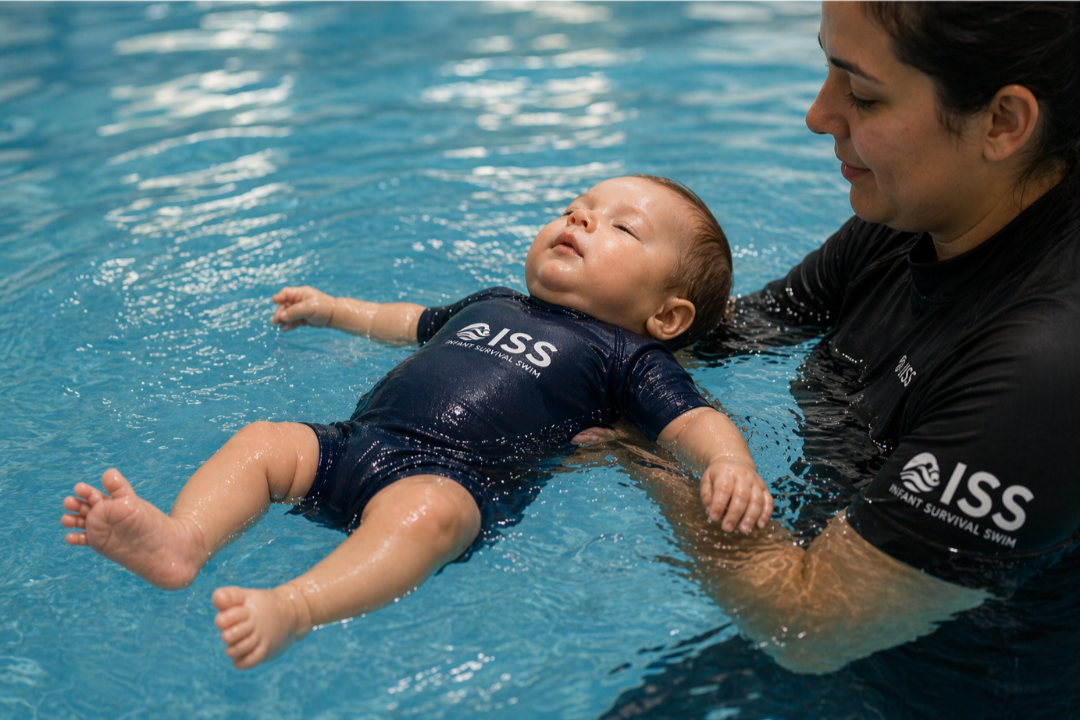
You know your baby best. Every child develops differently, and progress should always prioritize safety, confidence, and readiness over rushing milestones.
Are Swim Lessons Safe for Babies?
When taught by trained professionals in a safe and developmentally appropriate environment, swim lessons can be a positive experience for many infants and toddlers.
Parents should look for programs that prioritize:
Water safety
Small class sizes or individualized instruction
Warm water environments
Developmentally appropriate expectations
Strong instructor communication
Positive emotional experiences
Clean and safe facilities
It is also important to remember that no swim lesson program can replace supervision.
Even children with strong swimming skills should always be closely supervised around water.
Swim Lessons Are Only One Layer of Protection
At ISS, we strongly believe in layered water safety.
Swim lessons are one important layer — but not the only layer.
Families should also prioritize:
Active adult supervision
Pool barriers and fencing
CPR education
Emergency preparedness
Ongoing water safety conversations
The goal is to create multiple layers of protection around children anytime water is present.
Learn more about layered water safety:
👉 https://littlefinsswimschool.com/5-layers-of-protection-from-drowning/
Why Families Choose ISS
Families choose Infant Survival Swim because they want more than traditional swim lessons.
They want:
Survival-focused instruction
Water safety education
Confidence-building experiences
Swim–Float–Swim foundations
Parent partnership
Individualized teaching
Long-term safety skills
At ISS, the mission is simple:
To help save lives through water safety education and survival-focused swim instruction.
We believe every child deserves the opportunity to become safer, stronger, and more confident in and around the water.
ISS exists to help reduce drowning statistics and provide lifesaving water safety skills to families and communities everywhere.
Frequently Asked Questions
What age can babies start swim lessons?
Many babies can begin parent-participation swim programs during infancy depending on developmental readiness and instructor recommendations.
Are infant swim lessons safe?
When taught by trained professionals in a safe and developmentally appropriate environment, infant swim lessons can be a positive experience for many children.
What do babies learn in swim lessons?
Babies often learn water comfort, breath control foundations, floating skills, body awareness, and early water safety habits.
Do swim lessons prevent drowning?
No swim lesson can replace supervision. Swim lessons should always be combined with multiple layers of water safety protection.
Related Articles
What Is Infant Survival Swim (ISS)?
https://littlefinsswimschool.com/what-is-iss/
Parent Involvement in Infant Survival Swim
https://littlefinsswimschool.com/infant-survival-swim-parent-involvement/
The Reality of Drowning and Infant Survival Swim
https://littlefinsswimschool.com/reality-of-drowning-infant-survival-swim/
5 Layers of Protection From Drowning
https://littlefinsswimschool.com/5-layers-of-protection-from-drowning/